grew up in Barranquilla, Colombia. Right next to the Magdalena river. And I never once went.
It was always this industrial, kind of distant thing. Not really a place city kids went. I knew it existed the way you know a lot of things growing up: abstractly. Maybe once with school, someone pointed at it and said “this is the Magdalena river” and that was basically it. Then I moved to Vienna at 17 and didn’t really look back. That was almost 12 years ago.
A lot has changed in Barranquilla since then. The city has developed more in the last decade than in the previous fifty years. One of the biggest things is the river itself. They built a huge boardwalk, restaurants opened up along the banks, there’s a statue of Shakira, people go out for drinks with a view of the water. It became somewhere people actually want to be.
This past January, my dad’s friend invited us out on his small speedboat on the Magdalena. Just the three of us, some beers, music, birds. It was the first time I was actually on the river. Not standing next to it, not looking at it from a distance. On it.
And it was beautiful. I remember thinking that and being a little surprised by it. I don’t think I’d ever looked at Barranquilla and thought: beautiful.
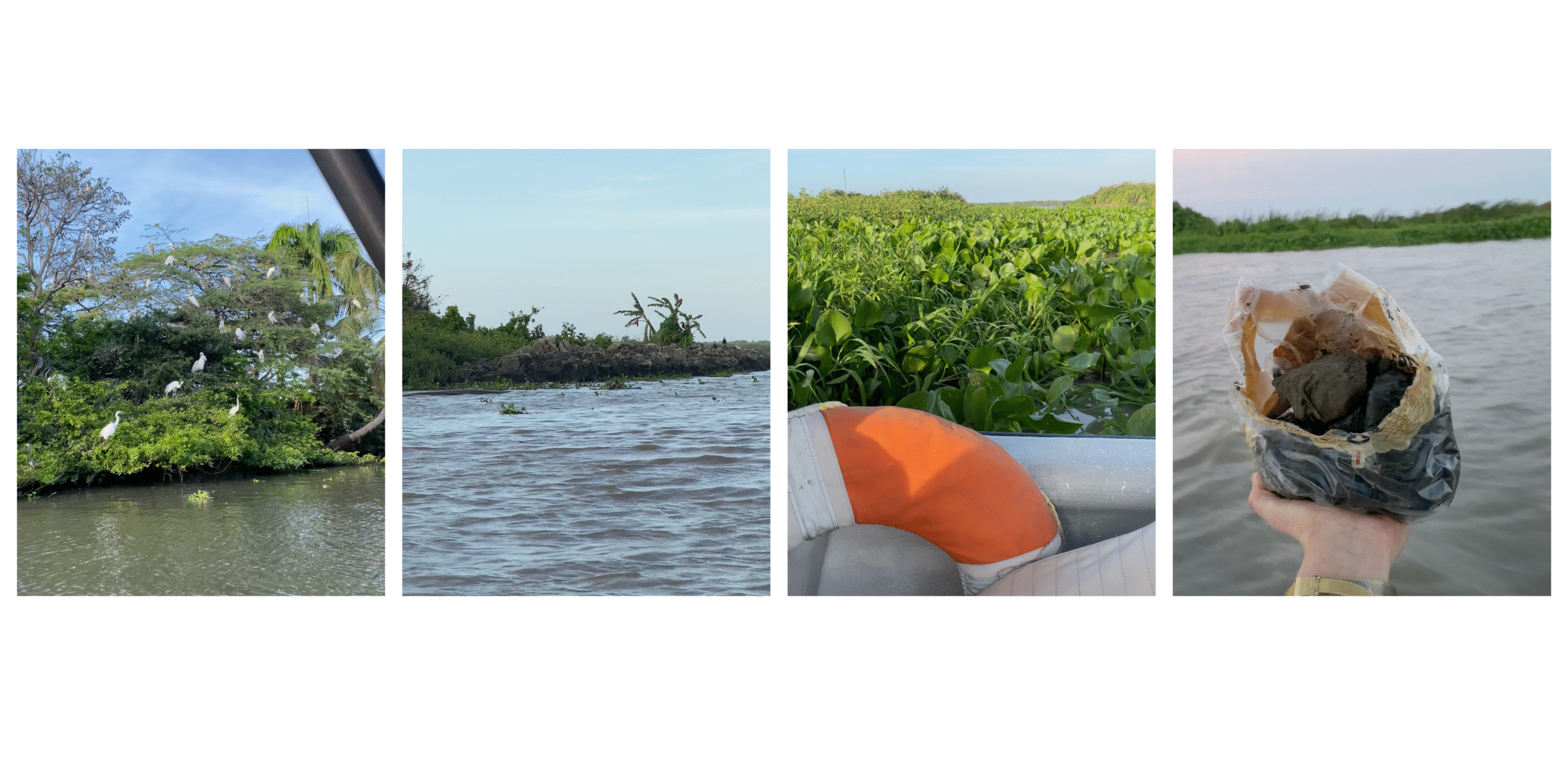
About an hour in, I noticed the bank on the side of the river. A whole hillside of it. That very specific cracking pattern that I now recognize immediately. Clay shrinks when it dries, and it leaves these particular marks. If you’ve worked with it enough, you just know. I knew.
And then I spent the next ten minutes arguing with myself.
Here’s the thing: I am the shyest person. And this guy hadn’t seen me in 12 years. The first thing I do is ask him to stop his boat so I can scoop dirt? It sounds insane. But I kept thinking: Yvonne, you will miss this. This is wild clay ceramics material literally sitting in front of you and you are going to say nothing because you are too shy?
So I went and asked. He said: “I don’t think that’s clay, honey.”
I said: yeah, it is. Can we stop?
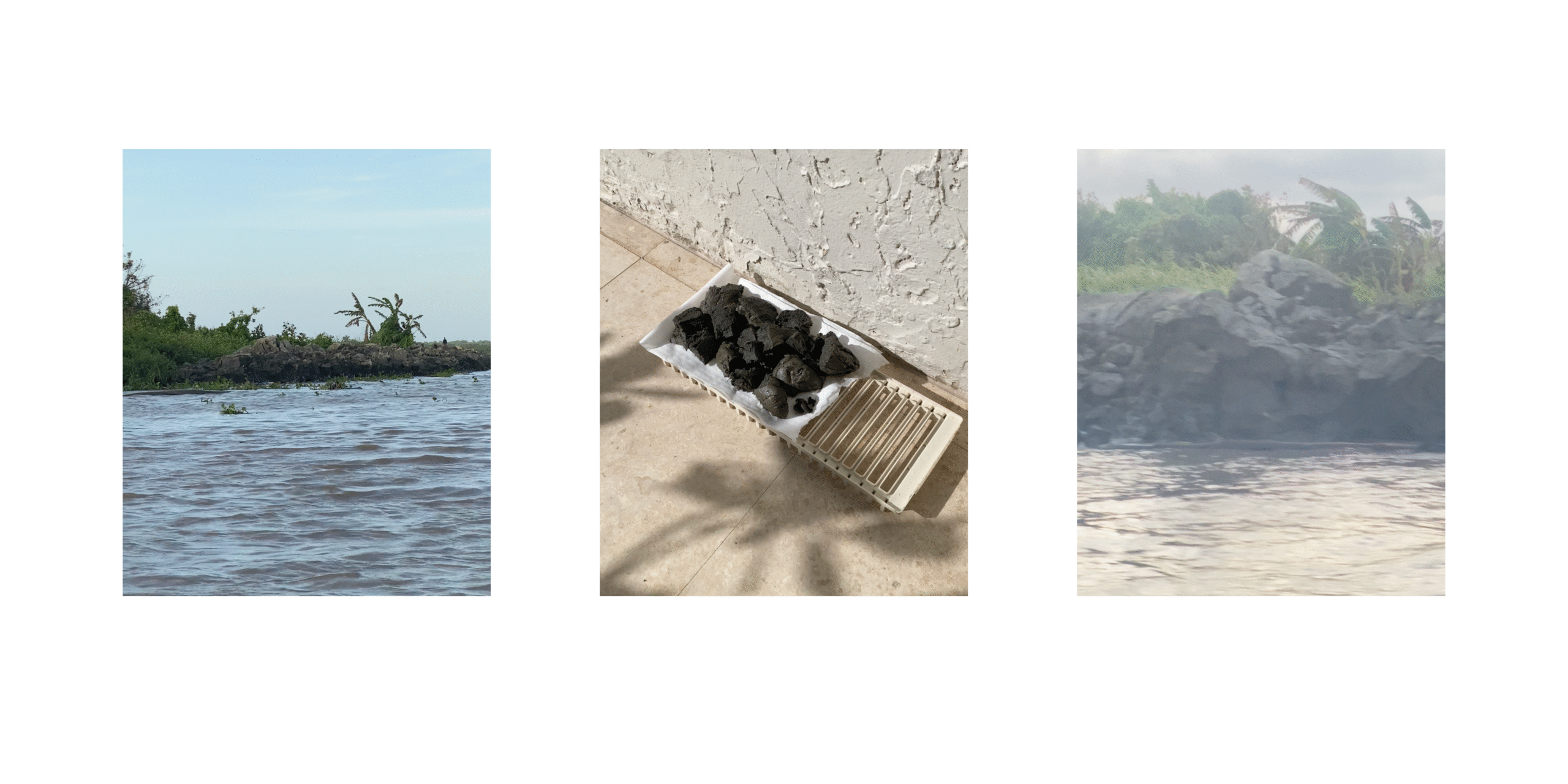
We stopped. My dad helped me shovel some out. We didn’t have any bags so we used the plastic packaging from the six-pack of beers — in Colombia they come wrapped in plastic, so we dismantled that and used it to store the clay in the meantime. On the way back I watched Barranquilla from the water and thought: I almost didn’t ask.
Getting it home was its own adventure.
Colombia is pretty strict about what leaves the country, especially through airports. I repacked everything properly before leaving, but I was about 90% sure they were going to confiscate it at security. I put it on top of my bag anyway (easier to take out if there was trouble) and figured I could at least try.
My grandparents thought I had lost it. “You’re weird. How are you going to take that on the plane?”
I didn’t have a great answer.
I watched my backpack go through the conveyor belt. It came out the other side. I started putting it back on, already feeling relieved. And then someone tapped me on the shoulder.
I turned around and launched straight into it: I’m an artist, I live in Vienna, this is clay I collected from the Magdalena river, it’s for my work, I know it looks like dirt…
He looked at me and said: “You have a fork in your bag, maam.”
I gave him the fork. Put my backpack on. Walked to my gate.
The clay made it to Vienna.
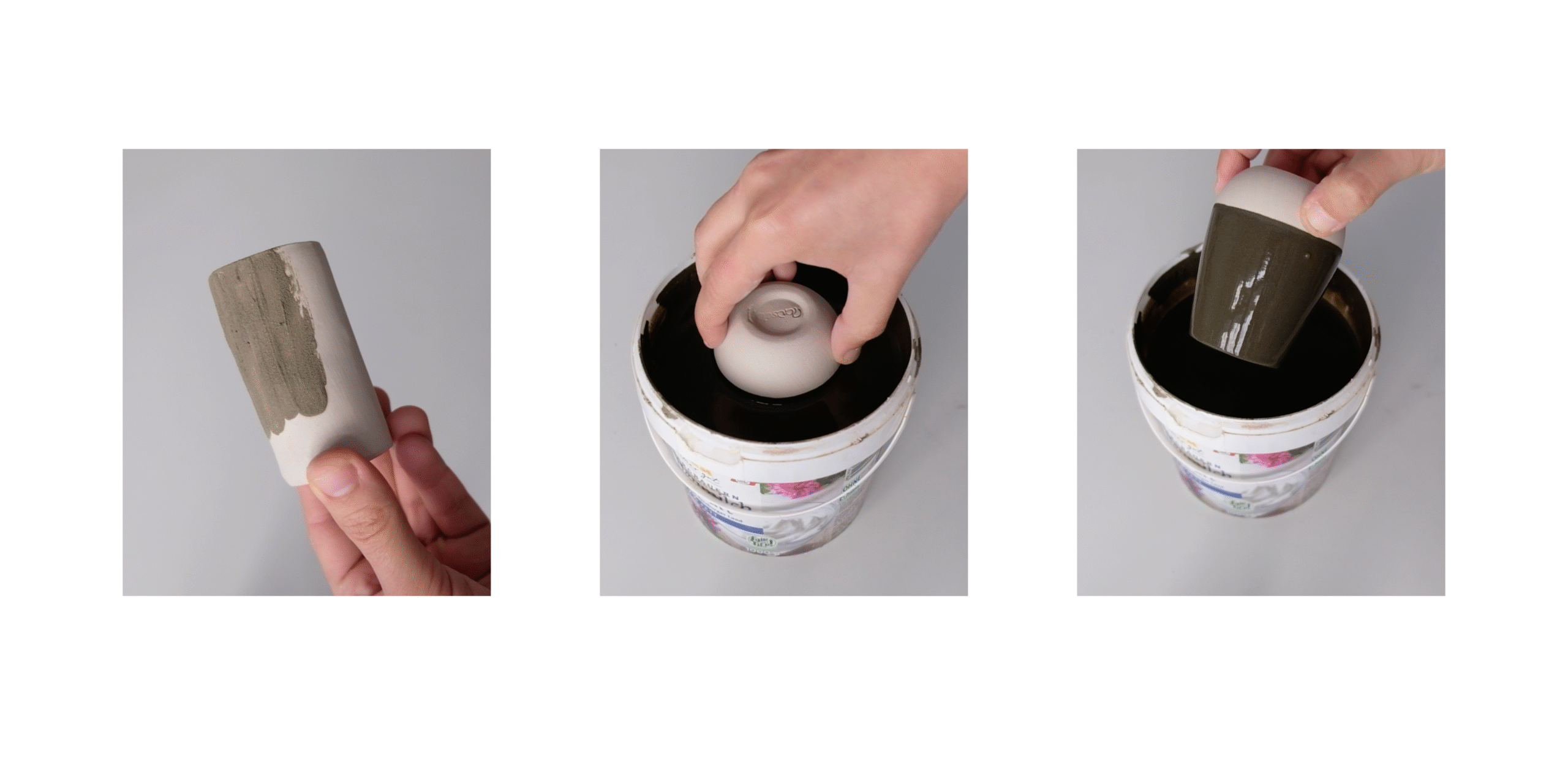
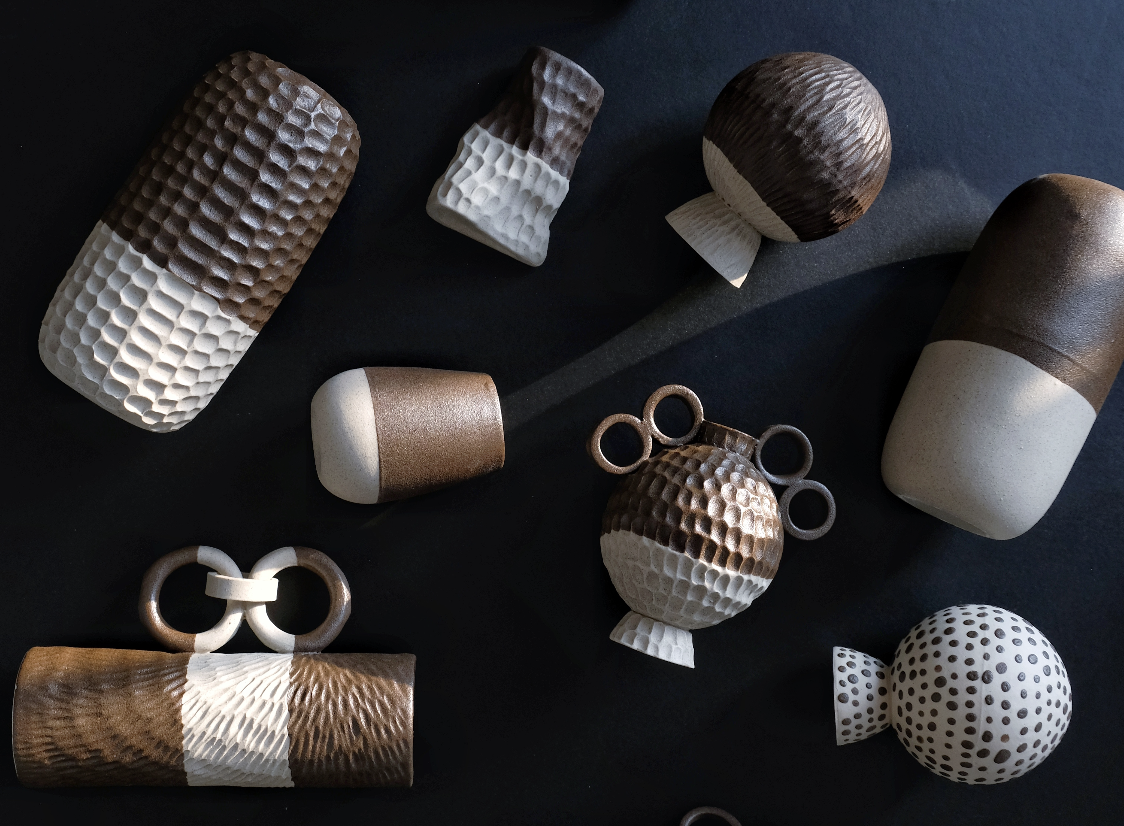
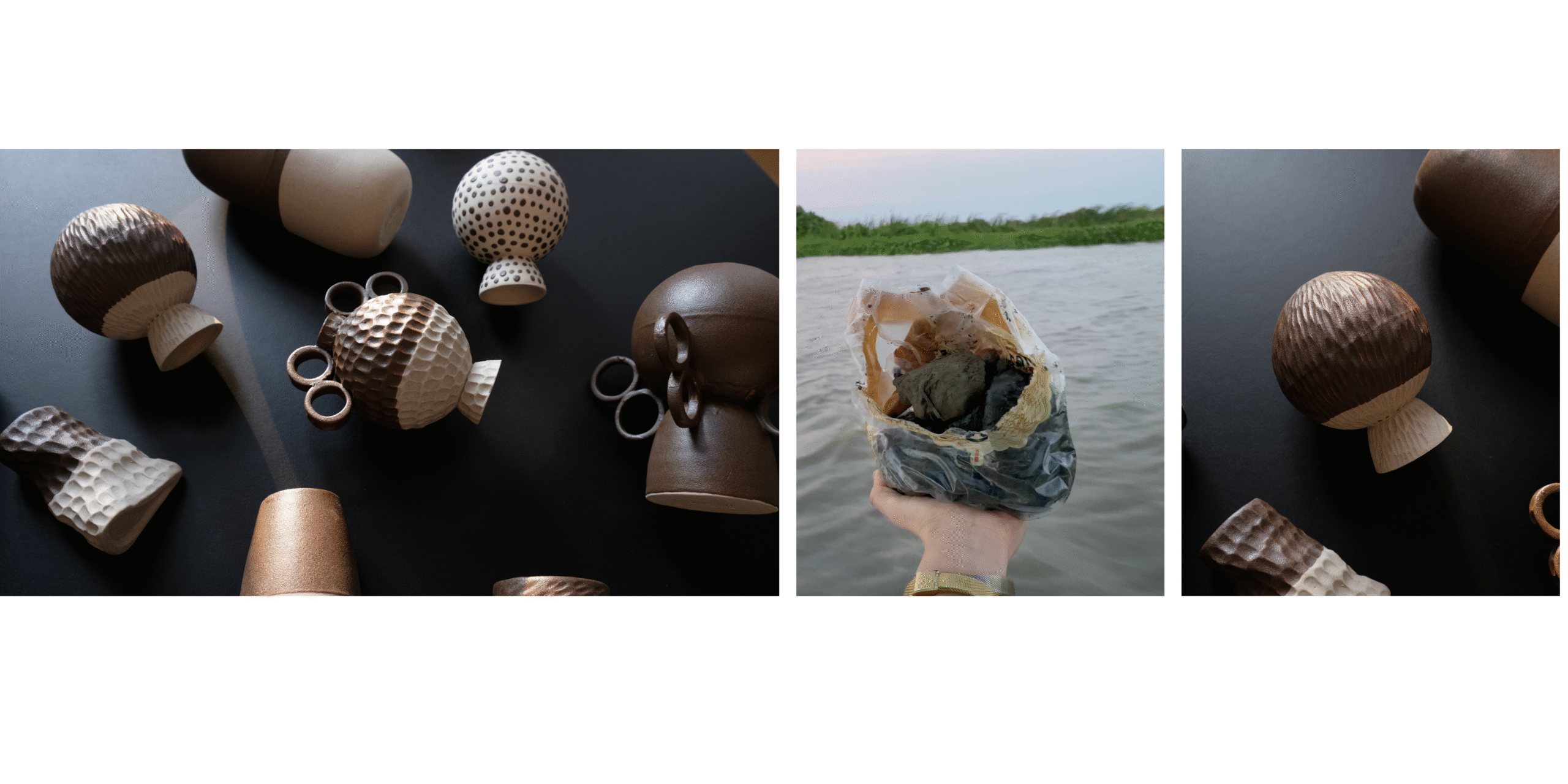
Back in the studio, I found out the wild clay ceramics process wasn’t going to be straightforward. The clay was too brittle to build with on its own. Every time I tried, it cracked and fell apart. So I had to think differently. I turned it into an engobe. Dipped my carved pieces into it instead of trying to construct anything from it directly. And that warm brown surface you see on the Magdalena Clay collection? That’s it. That’s the river.
Wild clay ceramics don’t always do what you expect. Sometimes the material tells you what it wants to be, and your job is just to listen.
I also created an instagram 3 part reel to showcase this fun story, you can see them here: PART 1 , PART 2, PART 3